
Ignatian Guided Meditation

This is a meditation on the passage of ‘The Woman at the Well’ (John 4:5-42) using a method of praying with scripture taught by Saint Ignatius.

Today I’m going to try something different.  Instead of giving a Carmelite-themed homily for this Third Sunday of Lent – the passage is ‘The Woman at the Well’ from John’s Gospel – I’m going to give an Ignatian Guided Meditation.  It’s a way Ignatius, Saint Ignatius, teaches us to pray with scripture.  He says, ‘immerse yourself in the passage; engage all the senses.’  What does it smell like?  What do you see?  What do you hear?  Engage your senses and immerse yourself in.  Then lean in and listen to what Jesus might have to tell you.  So let us begin…

We’re in Samaria; you’re in Samaria.  It’s noon.  You’ve been walking all morning and you’re tired.  It’s hot. You sit down on a rock near the well.  Jesus is sitting at the well.  You’re thirsty; very thirsty, and he’s doing nothing about getting water.  But then this woman comes up.  And you can hear her jewels and her bracelets clanking as she’s walking.  And you’re thinking, ‘what is she doing here?  No one is at the well this time of day.’  And she sits down near Jesus and you can hear them, but not hear them distinctly, talking to each other.  That’s because the wind which is so hot (it’s midday) is blowing against your ears.  That’s what you hear more than their talking – the wind.  Where did those disciples go?  Oh yeah, Jesus sent them into town.  So it’s just you, her, and Jesus.  You smell the heat on the rocks.  You smell some perfume.  Is that her perfume?  She’s wearing perfume in the middle of the day!  All of a sudden she runs off and then Jesus turns to you and says to you, ‘and what are you here for? what are you looking for?’  And you say to Jesus: 

Message to the Order regarding the Coronavirus

From Míceál O’Neill, O.Carm., Prior General

Míceál O'Neill, O.Carm., Prior General

Dear Brothers and Sisters,

On this rare occasion I want to address a word of support to all our members who in one way or another are affected by the continuing spread of Covid-19. Here in the Curia we have heard the instructions of the Italian government and we have done our best to follow all the instructions. This has meant saying to our staff that they should not come to work until further instructions. We have organized our life in such a way that none of us will have people coming to the house and no one will leave the house until the ban is lifted, except for emergencies and essential services. We recognize the sacrifice that this entails, but we feel that we have to allow ourselves to be guided by the advice of the experts.

We will keep in our thoughts and prayers, those who have died and their families who are in mourning. We will pray for the medical profession, that the researchers may succeed in identifying this virus and finding the best ways to protect the population from infection, and the doctors and nurses may be able to help all who have fallen victim to it.

We must not allow ourselves to lose confidence or to be gripped by fear. This experience may lead us to reflect on how powerless we are, despite all our progress. At moments like this we realize more clearly that without God, we can do nothing. It is a good moment for us to renew our faith in God and our commitment to the wellbeing of one another, and in a special way our care for the poor, for the ones who are least able to cope when life gets difficult. In the time that we spend confined to our homes, we may find ourselves thinking and praying more, at one with Mary the Mother of God who kept all these things and pondered them in her heart. 

Míceál O’Neill, O.Carm.
Prior General

Doubt and Fear

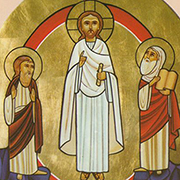
Carmelite homily for Sunday, March 8, 2020 – Lectionary 25 (Matthew 17:1-9) – Second Sunday of Lent

Today’s Gospel is Matthew’s account of the Transfiguration, where, it says, Moses and Elijah appeared and were seen conversing with Jesus.  It doesn’t say what they were talking about, but here’s what, I think, they were talking about.  Moses spoke and said, “Jesus, I doubted.  I struck the rock twice when God said to strike it.  I almost failed my mission because of doubt.  Do not doubt.  And then Elijah would speak and said, “Jesus, do not fear.  I was afraid of King Ahab and Queen Jezebel and I ran from them.  And I almost failed my mission because of fear.  Do not be afraid.”   That’s the invitation of today’s Gospel; yes, doubt and fear are powerful motivators in our life and there’s no way we can escape them.  I think the invitation is: don’t let them control you.

Goodness and Greatness

Carmelite homily for Wednesday, March 4, 2020 – Lectionary 226 (Luke 11:29-32)

Because today’s Gospel passage is the same, this homily is repeated from Monday, October 14th.

Instead of giving you a Carmelite quotation today, I’m going to give you my take on today’s Gospel passage.  The people come to Jesus asking for a sign and he says, “no, because you’re looking for the sign of Jonah like in the time of Nineveh, or the time of Solomon when the Queen of Sheba visited.  You don’t see what’s in front of you.”  I think what they’re doing is they’re living in the past.  Jonah was a great preacher and the people of Nineveh turned their lives around.  Solomon was a great king and the Queen of Sheba and others came from great distances to listen to him.  They’re living in the past.  “We were great then with Jonah; we were great then with Solomon!”  But they are great today with Jesus and they don’t see it.  The call of today’s Gospel is to see the goodness and the greatness right in front of us. 

Carmelite Logo

What Are My Verticals?

Carmelite homily for Tuesday, February 25, 2020 – Lectionary 342 (Mark 9:30-34)

Those disciples, they’re at it again, arguing who is the greatest.  So Jesus brings a child and places the child in the middle and says, “whoever receives a little one like this receives me” and “the last shall be first, the first shall be last.”  What he’s getting at is all the things that keep us enslaved, like the disciples ‘who’s the greatest?’  It’s status, it’s power.  Their culture was very vertical and Jesus is asking for very horizontal.  But what about us?  What are our verticals that we’re not willing to budge on?  Money? or power? or status? or wealth? or the house? or my will? or my control?  What are my verticals?  And are they child-like?  That’s the call of today’s Gospel.  It’s not to be a child necessarily, but to check what are the verticals?  What are the non-negotiables?   What are the things I insist on having my way?  And does that have to be so? 

Immensity of Christ

Carmelite homily for Thursday, February 20, 2020 – Lectionary 338 (Mark 8:27-33)

In today’s Gospel Jesus asks the disciples, “Who do people say that I am?” And they give a bunch of answers and finally Peter says, “You are the Christ.”  Then Jesus predicts his upcoming passion and death.  And Peter says, ‘Oh, This must not happen to you.’  Jesus, “Oh, behind me Satan for you do not think as God thinks but as human beings think.”  I think that’s the call of today’s Gospel: is to think beyond what human beings think; to think as God thinks.  Edith Stein (Saint Teresa Benedicta of the Cross) writes, “Living in a Eucharistic way means coming out of oneself, out of the narrowness of one’s life and growing into the immensity of life in Christ.”  I think that’s why Jesus begins with the question, “Who do people say that I am?”  Is your understanding big enough, immense enough, to understand Jesus?  Because that’s what you’re called to grow into – that immensity.  That’s what we called as Christians, as Eucharistic people, as disciples – to grow into the immensity of Christ.  

Do Not Go Back

Carmelite homily for Wednesday, February 19, 2020 – Lectionary 337 (Mark 8:22-26)

In today’s Gospel we have a very interesting passage.  The people from the village of Bethsaida bring to Jesus a blind man.  And Jesus heals him – it takes two tries – and concludes with the line, “Do not even go back into the village.”  Why?  The purpose of all Jesus’ healings is to allow people back into the village, back to their families, back to society because the blind, the unclean, the lepers, the lame were all kept outside the village for health reasons.  So why would Jesus tell this man to not go back?  There must be something wrong with the village.  That if he goes back, all the problems come back.  So, I think, the call of today’s Gospel – are we part of the problem? – is to check out our own village.  Are we adding to it or are we suffering from it?  Let’s clean up the village.  It’s really the call of today’s Gospel. 

Already Promised

Carmelite homily for Sunday, February 2, 2020 – Lectionary 524 (Luke 2:22-40) – the Presentation of the Lord

In the Liturgy of the Hours (the Divine Office) we pray three Canticles.  In the morning, Lauds, we pray the Canticle of Zechariah (the Benedictus).  At Vespers, evening prayer, we pray the Canticle of Mary (the Magnificat).  And at Night Prayer, Compline, we pray the Canticle of Simeon (the Nunc Dimitis).  In today’s Gospel we have the prayer of the Nunc Dimitis.  In all three of these Canticles, it’s interesting, that the prayer – Zechariah, Mary, or Simeon – says, “God you promised this; now you need to deliver this.”  Like today Simeon has been promised that he would not see death till he saw the Christ, and he prays, “your word has been fulfilled.”  I think that’s the teaching of today’s Gospel of the Presentation, and all these Canticles from Luke’s Gospel – when you pray, pray for something God has already promised.  That’s what Zechariah does.  That’s what Mary does.  That’s what Simeon does in today’s Gospel.  We pray for what’s already been promised.  What’s been promised?   Life.  Peace.  Adoption into Christ.  Fullness of Life.  Resurrection.  Eternal Life.  These are the things that have been promised by God, so we can be cheeky in our prayer – like Zechariah, like Mary, like Simeon.  If God has promised, then we can say, “okay, God, deliver.”  

Necessity Knows No Law

Carmelite homily for Tuesday, January 21, 2020 – Lectionary 312 (Mark 2:23-28)

In the Gospel today Jesus and his disciples are walking through a field and the disciples are grabbing the grain and eating it as they walk along.   And the Pharisees say, “Uhh, you’re not allowed to do that on the Sabbath.” First off, what are the Pharisees doing in that field on the Sabbath, and second off, I think our Carmelite Rule says this very well.  The Rule says, “Necessity knows no law.”  Because the law serves to help us get to deeper life, more mature life, fullness of life.  That the call.  Not the law.  The law is a tool, a mechanism, to life, love, depth, maturity.  That’s the reminder in today’s Gospel.  

I’m Back!

I’m back after the Christmas break and semester break.

Hello, everybody!  I’m back!  I took some time off for semester break, Christmas break, and now I’m going to be resuming this blog.   And adding a few things to it like some book reviews of some interesting books.  And whatever else catches my fancy I’ll be adding to this blog.  So look forward to some new postings and I’ll see you on line.