Look Not

Carmelite homily for Wednesday, February 28, 2024 – Lectionary 232 (Matthew 20:17-28). 

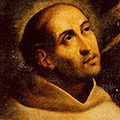
Back when I was in college I was asked to be the caretaker of a professor’s house.  He was the dean of his school, while he was on an extended sabbatical.  Beautiful place – grand piano, great art on the walls, great musical selection – beautiful place.  I would invite my friends over, not so that we would be comfortable or just use the place, but to Show Off!  That’s what I was busy doing was showing off!  How much of our day is spent showing off?  They are all to look at me, or give me attention, or it’s all about me.  Me, My, I.   And I think that’s what we see in today’s gospel.  John and James send their mother to ask for positions of honor for the sons. Why?  Because they want to be more important than the rest.  And then the other disciples, the other apostles, all get angry at John and James and so they’re all upset too.  And Jesus says, “Can you drink the chalice?”  And they say, “We can!”  But the chalice is the chalice of humility.  It is not one they can easily drink after all, because they are far from it.  Saint John of the Cross says, “It is a great wisdom to know how to be silent.  Look at neither the remarks nor the deeds nor the lives of others.”  I think that all the apostles miss that and maybe that’s the chalice that Jesus wants them to drink.  To be silent and not look at each other, neither the remarks nor the deeds nor the lives.  To be content just to be in the company of Jesus. 
Saint John of the Cross

Our Father – Backwards

Carmelite Homily for Tuesday of the First Week of Lent, February 20, 2024 – Lectionary 225 (Matthew 6:7-15).

A few years ago my spiritual director gave me a task: to say the “Our Father” backwards.  Not word by word backwards, that would be pointless, but phrase by phrase backwards, so that the meaning of those phrases can take on new life.  Because we can whip through the “Our Father” in seven seconds, and none of those phrases have any meaning at that speed.  Today in the Gospel Jesus gives us the “Our Father” – Matthew’s Gospel.  And there is such value in here.  For example, Saint Teresa of Avila, in her book, The Way of Perfection, says that just in those two words.  She says, “In two words, Our Father, you fill our hands completely.”  And she riffs for chapters on just those two words, Our Father.  Tying it to the Prodigal Son; tying it be being brothers and sisters, tying it to that the son is always forgiven, tying it to if that’s our father what other titles or what other nobility do we need?  She goes on and on in those two words.  So that’s my task for you today: try to say the “Our Father” phrase by phrase backwards.  Let me try it.  Amen.  Lead my not into evil.  Deliver from temptation.  As I forgive those who trespass against me, forgive me my trespasses.  Give me my daily bread.  Thy Kingdom come, thy will be done.  Or – thy will be done, thy kingdom come.  We’re doing this backwards.  Our Father in heaven.  Our Father.  Amen. 

Saint Teresa of Avila

Repent = Rethink

Carmelite Homily for the First Sunday of Lent, February 18, 2024 – Lectionary 23 (Mark 1:12-15).

In today’s Gospel the very first words out of Jesus’ mouth in Mark’s Gospel is “Repent, and believe the Good News!”  We hear that word “repent” and we think it is kind of a negative word.  That it means to be sorry for our actions.  But no, that’s not what it meant in those days.  It meant repent = rethink.  Like we use the word “pensively” to mean “thoughtfully.”  ‘Pent’ means ‘to think.’  So what Jesus is announcing is “rethink” – think differently; think new.  And it’s Good News.  Everything we thought about life: oh, we’ve got to just survive it, or I’ve got to take care of just me, or life is hard, or God is mad.  All that, no, rethink.  It’s Good News.  Life is meant to be Good News.  Saint Therese says, “You will not arrive at what you desire by your own path or even by high contemplation, but only a great humility and surrender of heart.”  I think that’s what Jesus means when he says, “Repent and believe in the Good News!”  And that’s what Jesus is inviting us to.  He is inviting us to put on the mind of Christ.  The mind of Life.  In Paul’s letter to the Philippians he begins with this beautiful passage about, “don’t worry about just yourself but worry about your neighbor too; take care of them.”  And he concludes that passage with “put on the mind of Christ.”  That’s what “repent” means: to put on the mind of Christ.  And when we do that we see, “wow, I was thinking wrong; or I was doing wrong; or I was just simply wrong!”  And then the new meaning of repent – sorry – can kick in.  Because, wow, was I dumb! It’s time for me to rethink and relive.  And that’s the Good News.

Saint Therese of Lisieux